
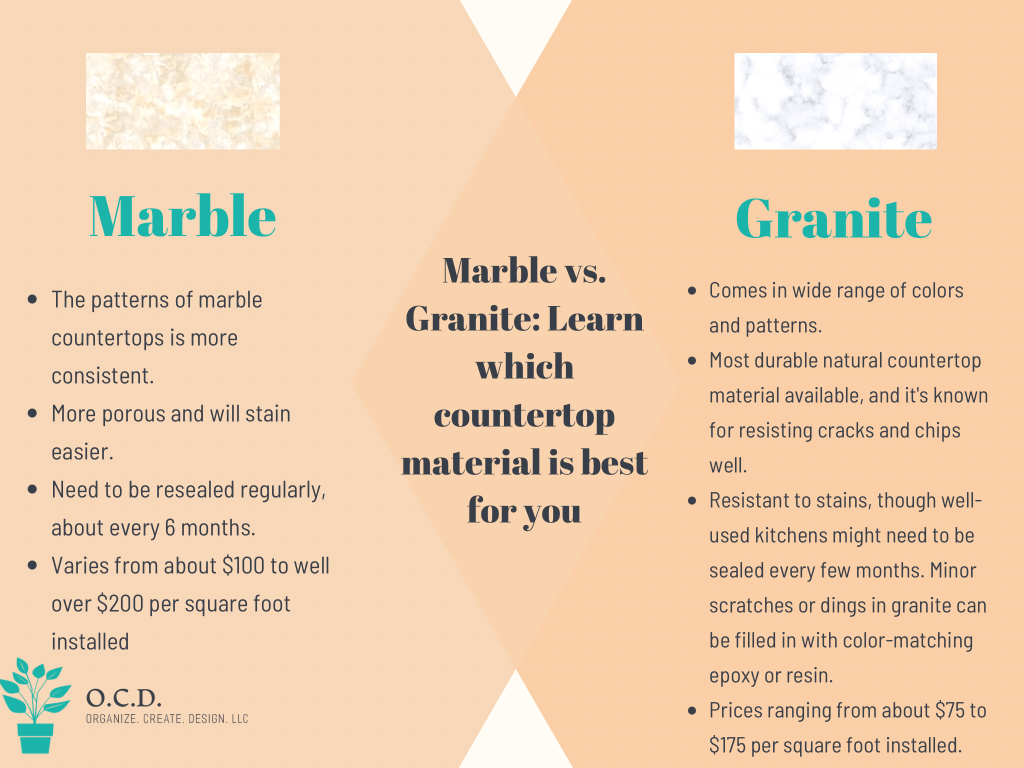
When choosing countertops for the kitchen or bathroom, many homeowners prefer the look of natural stone surfaces. Typically installed in large slabs, these materials are available in a nearly endless array of unique colors and patterns and can help you achieve a polished look. One of the most popular countertop materials on the market, granite is a favorite choice for adding depth and texture to traditional, modern, or transitional-style homes. Marble, on the other hand, is synonymous with luxury and provides high-end style when used in kitchens and baths. It can be paired with sleek surfaces for a contemporary look or used to dress up farmhouse-style spaces. Both materials lend dimension and gorgeous natural patterns to countertops, but each comes with specific considerations for maintenance, durability, cost, and more.
Appearance
As with any material, the aesthetic differences between granite and marble are a matter of taste.
Granite: Some people prefer the natural look of granite, which comes in a wide range of colors and patterns. Granite countertops often feature flecks or veins in hues like black, pink, gold, red, or green.
Marble: Others like the elegance and veining of marble, which is easily recognizable and most commonly available in black or white. With large veins running across the surface, the pattern of marble countertops is generally more consistent than that of granite.
Durability
Both marble and granite countertops need to be properly sealed to maintain their long-term durability.
Granite: Granite is often cited as the most durable natural countertop material available, and it’s known for resisting cracks and chips well. With granite countertops, you can typically cut right on the surface without damage, place hot pans directly on the countertop, and wipe away spills easily.
Marble: Like granite, marble is very strong and resistant to damage. However, it is much more porous and will stain easier than granite. Marble is particularly susceptible to etching from acidic liquids like vinegar or lemon juice.
Maintenance and Repairs
Both marble and granite countertops require routine maintenance and upkeep.
Granite: With proper annual re-sealing, granite is very resistant to stains, though well-used kitchens might need to be sealed every few months. Minor scratches or dings in granite can be filled in with color-matching epoxy or resin.
Marble: Marble countertops need to be resealed regularly, about every 6 months (sooner for high-contact surfaces). Minor damage to marble can be repaired similarly to granite.
Installation and Price
Both granite and marble should be installed by a professional. These materials are extremely heavy and can be difficult to handle. Also, cutting holes for a sink and other fixtures is no easy task.
Granite: In terms of price, granite is generally less expensive than marble. However, the cost of granite countertops has started to go down recently, with prices ranging from about $75 to $175 per square foot installed.
Marble: Marble prices can vary from about $100 to well over $200 per square foot installed. To save money on marble, choose tiles instead of pricier slabs.
 OCD, Organize Create Design LLC