
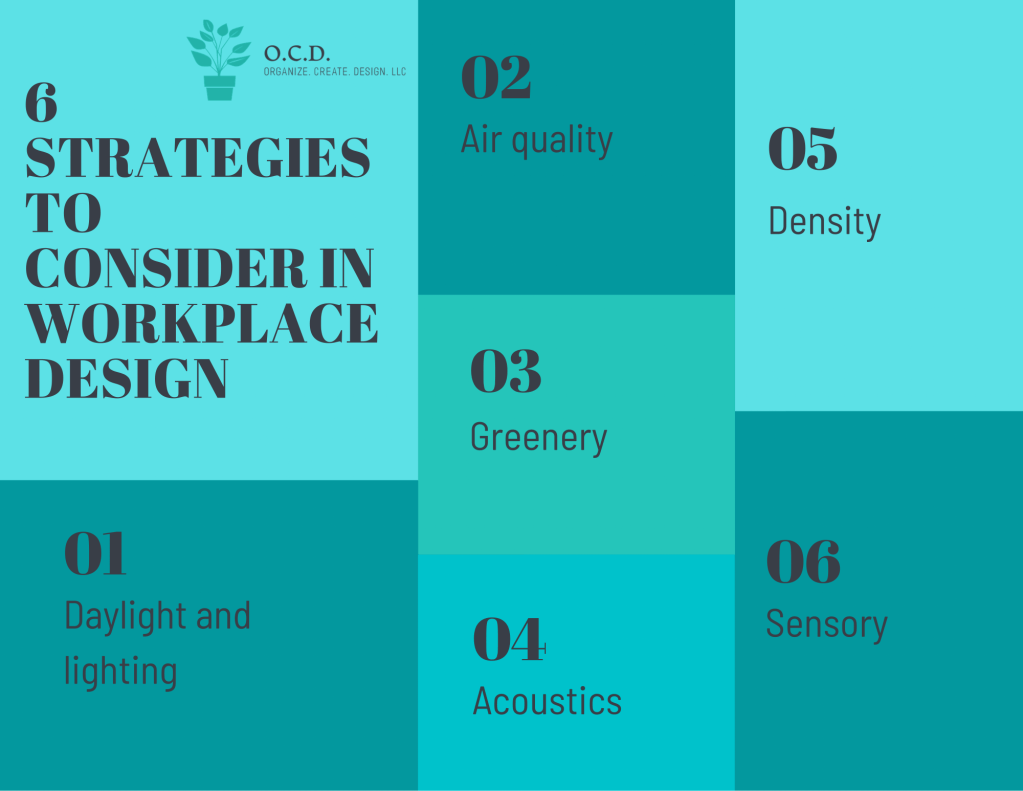
Day light and lighting
Daylight is known to be a key component to helping those coping with Seasonal Affective Disorder.
When daylight might not be available, LED lighting can also help as it feels more natural than the previously prevalent fluorescent office lighting. Furniture arrangement can also take advantage of views or simply make better use of daylight. Flexibility and ability to control lighting with dimmers or personal task lights and window treatments is also a benefit, as some workers are particularly sensitive to brightness and intensity of light.
Air quality
Poor indoor air quality can contribute to respiratory problems, which not only impacts physical health, but also general mental health and more specifically, depression. Air quality decreases with highly densified cities trending toward more heavily populated office space.
Greenery
Who doesn’t like a bit of greenery? While it’s obvious that plants and flowers can brighten any interior space, research shows that greenery increases cognitive performance in the workplace and results in a more positive psychological state. Additionally, it helps preserve air quality, which is also linked to mental health as noted above.
Acoustics
We all know noise affects productivity, but those with mental illnesses can be particularly bothered by it. There are many articles and studies that recommend various solutions including altered furniture layouts, the addition of more collaborative workspaces, acoustical treatments, use of headphones, etc.
Density
Today’s workplace is denser than ever before, especially with the rising costs of real estate in the city. While an employer might seek to squeeze more employees into less space, workers still want to maintain their bubble, particularly someone who suffers from anxiety. This person tends to perceive threats as closer than others. Similarly, density can negatively impact those that are hypersensitive to sound. Too little personal space can be disruptive and jeopardize productivity.
Sensory
While appealing to all the senses is important, visual sensory can greatly impact mental health. Designers must find the perfect balance between a design that’s visually stimulating and one that’s overdone. Too much of the same neutral color or the same pattern or texture can become boring, but something too bold can be bothersome or distracting to someone with a mental illness resulting in reduced productivity.
There is nothing more appealing to a potential employee than seeing that an employer cares about the wellbeing of their staff, which includes their mental health.
 OCD, Organize Create Design LLC